In This Article
K-dramas often do more than simply entertain. They hold a mirror to society, sparking conversations about deeply entrenched issues. Few series have done this as powerfully as "Teach You a Lesson" (참교육, Chamyuguk). This drama explores the harsh realities of South Korea’s education system. It portrays a world where school violence is rampant, teacher authority is crumbling, and the system itself nears a breaking point. The show tackles these uncomfortable truths head-on. It prompts audiences in Korea and abroad to consider the real-world social backgrounds behind Teach You a Lesson‘s fictional nightmares.
Key Takeaways
- South Korea’s education system faces a crisis of declining teacher authority and escalating school violence.
- The drama "Teach You a Lesson" expands on real-world issues like school bullying, parent harassment, and juvenile delinquency, presenting them as systemic failures.
- Both Korean and international viewers found the drama relatable, with many abroad shocked that the fictional scenarios were often based on actual events.
- "Teach You a Lesson" drew criticism for its extreme violence and vigilante justice, raising concerns that it prioritized emotional catharsis over genuine institutional reform.
Korea’s Education System on the Brink
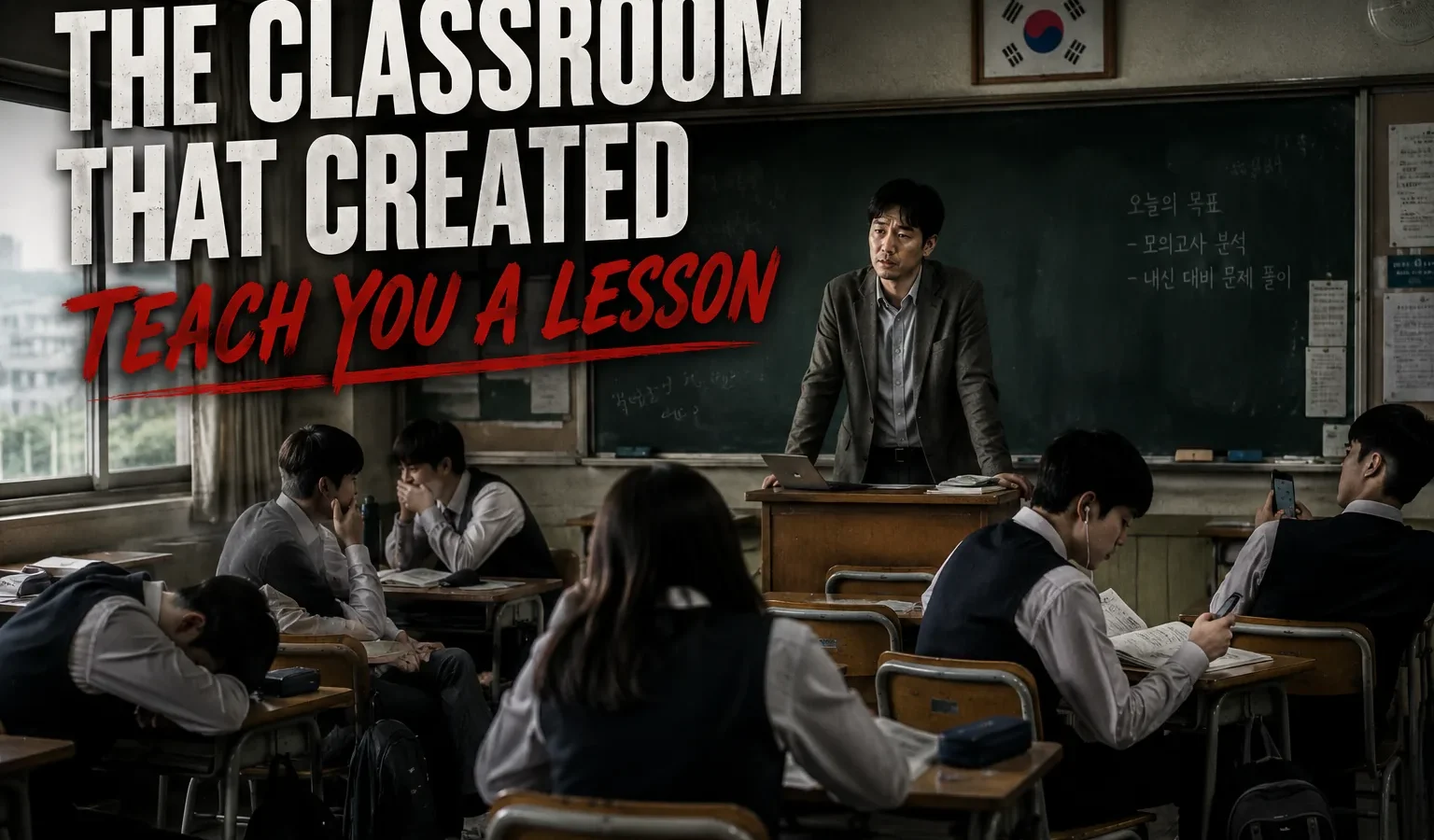
Korea’s education landscape faces significant distress. Teacher authority, once a system cornerstone, has eroded. Educators find it increasingly difficult to guide students effectively, often feeling systematically disempowered. School violence has become more brutal and complex. Teachers are caught in the crossfire, struggling against malicious parent complaints and unfair blame from the school system. This environment can leave them isolated and helpless. Powerful parents and institutional loopholes sometimes create a perception of student impunity. This fuels a desperate longing for self-help solutions when formal channels fail. Adding to this pressure, many teachers are reluctant to seek mental health treatment due to social stigma. The fear of career impact often prevents them from getting needed support.
When Fiction Mirrors Reality: The Premise of "Teach You a Lesson"
Enter "Teach You a Lesson," a K-drama adapted from a popular webtoon. Its mission is clear: to deliver "true education" to those who violate educational rights. It aims beyond punishing delinquent youth, striving for a broader definition of educational justice. The drama confronts various pressing educational issues in Korean society. These include school bullying, parent harassment, the complexities of juvenile offenders (chochbeop sonyeon), and digital violence. It excels at portraying these as systemic failures, intertwining the lives of teachers, students, and parents. What truly shocks audiences is how often the drama’s scenarios root in real-life events. A teacher’s death in Seoul in 2023, linked to malicious parent complaints, highlighted the grim reality behind the show’s fictionalized situations. For many, "Teach You a Lesson" is not a distant fantasy.
Why This Drama Hits So Close to Home (and Far Abroad)
"Teach You a Lesson" resonated deeply with Korean teachers and the wider public. Many expressed serious concerns about the current state of education, feeling the system’s balance is broken. Teacher organizations agreed that the fictional premise reflects their reality: the current system often fails to protect educators. Viewers found powerful catharsis in the drama’s direct and satisfying approach to complex problems. It taps into a widespread yearning for restored teacher authority amidst the educational environment’s despair. The international response was equally fervent. American Reddit users praised the show’s "soda pop moment" (saida) quality – a satisfyingly direct resolution to frustrating social problems. Forbes lauded it as "one of the best dramas of the year," citing its universal themes, strong script, and immersive entertainment. Many international viewers connected with the show, remarking, "This is exactly what our schools are going through." They were often shocked to discover that some seemingly exaggerated dramatic elements were, in fact, based on real events.
The Controversial ‘Justice’ of "Teach You a Lesson"
Despite its popularity, "Teach You a Lesson" also ignited significant criticism and controversy regarding its methods and message. The show’s graphic violence, such as setting schools on fire or physically assaulting students until unconscious, sharply divided audiences. Teacher unions criticized the portrayal of corporal punishment as insulting to educators actively working to eliminate it. Some critics deemed the drama’s solutions overly violent and unrealistic. Concerns arose about the show’s approach, which some interpreted as advocating "state-sanctioned violence." Questions also arose about protagonist Na Hwa-jin’s personal motives for revenge. Critics argued this mirrored government leaders abusing power for private gain. Fears existed that such vigilante justice could erode public trust in official systems by disregarding due process. The drama, some suggested, risked remaining a source of emotional release rather than sparking discussions for institutional reform.
Understanding the Nuances: Tips for International Viewers
- Vigilante Justice vs. Reality: While "Teach You a Lesson" offers a cathartic experience through its violent solutions, it’s crucial to understand that these are fictional and not endorsed as legitimate methods for addressing real-world school problems in Korea.
- Teacher Authority (Gyogwon): The term gyogwon refers to the authority and status of teachers within the Korean education system. Its decline is a major concern, and while "teacher authority" is a direct translation, the concept carries a deep cultural and institutional weight in Korea that might not be fully conveyed without further explanation.
- The "Soda Pop Moment" (Saida): This Korean expression describes the satisfying feeling of a frustrating situation being resolved in a refreshingly direct, often unexpected, way. The drama’s illicit forms of punishment might be confusing to international viewers without understanding this cultural preference for saida moments.
- Juvenile Offenders (Chochbeop Sonyeon): In Korean law, chochbeop sonyeon refers to young people aged 10 to under 14 who are not held criminally responsible. Their actions are handled under juvenile protection laws. This concept is a significant point of contention in Korean society and is central to some of the drama’s plotlines.
- Stigma Around Mental Health: The perception that seeking mental health treatment could negatively impact a teacher’s career is a specific cultural context in Korea. This stigma can make it difficult for educators to seek necessary help, exacerbating their feelings of isolation.
FAQ
What problems in the Korean education system does the drama ‘Teach You a Lesson’ address?
The drama addresses various issues in Korean schools, including declining teacher authority, escalating school violence, malicious parent complaints, juvenile delinquency (chochbeop sonyeon) problems, and digital violence. It portrays these as systemic issues rather than individual failings.
Why did ‘Teach You a Lesson’ resonate so strongly with Korean audiences?
Many Korean viewers resonated with the drama due to their serious concerns about current educational problems and frustration with a perceived broken system. The show’s satisfyingly direct solutions offered a cathartic release, reflecting a societal yearning for the restoration of teacher authority.
Why did international viewers show interest in ‘Teach You a Lesson’?
International audiences found the educational problems depicted in "Teach You a Lesson" to be universally relatable. The show’s "soda pop moment" (saida) narrative—where systemic flaws are exposed and problems are resolved in a direct, satisfying way—garnered significant overseas praise. Many were shocked to learn that seemingly exaggerated plot points were often inspired by real events.
What criticisms and controversies did ‘Teach You a Lesson’ face?
The drama faced criticism for its excessive portrayal of violence, such as arson and physically assaulting students. Teacher organizations found the depiction of corporal punishment insulting. Some critics argued that its vigilante justice approach risked undermining trust in official systems and offered only emotional catharsis, not pathways to institutional reform.
Is the story in ‘Teach You a Lesson’ inspired by real events?
Yes, many episodes in "Teach You a Lesson" are inspired by actual events. Notably, the teacher’s death in Seoul in 2023 due to malicious parent complaints mirrors situations depicted in the drama, which deeply shocked both domestic and international audiences with its realism.